I started this book on Wednesday night and finished it today (Saturday). And I did not stay home from work to read, even though I wanted to. I did, however, stay up late last night reading it, which proved to be a mistake, but I'll get to that.
I read the crap out of this book. I enjoyed the crap out of this book.
It's the story of four hockey-playing guys - Trevor, Randy, Carl and Ben - who were best friends in high school but went their separate ways after graduation. 24 years later, they're back in their hometown to attend Ben's funeral, after he kills himself.
Trevor is our narrator and has just been diagnosed with Parkinson's. As a result of the diagnosis, his doctor has recommended he keep a journal. Trevor decides to start a memory journal, in which he tells us about when the guys were 16 and what happened that winter that changed their lives forever. The memory chapters alternate with Trevor's narration on the present, being back in his hometown, facing his friend's death, the girl he left behind, the events that he can't forget...but may not remember correctly.
And that is part of the beauty of the book, a narrator who has no reason not to be honest, except that he drops those oh-so-subtle hints that he's sure that's how it went because that's how he remembers it or that this is what he remembers, whether it actually happened that way or not. It's a great story, a psychological thriller-cum-ghost story that, when read late on a Friday night, may make the reader hear things that aren't really there or see shadows that may not be from the streetlights. You still trust Trevor, though, and you want to believe him, even when it gets spooky.
It's also almost impossible to put down, which is why I finished it so quickly. But even with a fast-moving plot, the characters are still developed enough to make you care about them and all the characters in the book are there for a reason. It's a well-told story that is ghost story, thriller, buddy reunion and man-in-mid-life-crisis tale all rolled into one.
Best read when you have a few days to enjoy uninterrupted.
Chronicling the ups and downs of weight loss while still enjoying all the good things life has to offer.
Showing posts with label book review. Show all posts
Saturday, March 17, 2012
Monday, March 5, 2012
Book Review: This Dark Endeavour
I love the idea of books that explore the beginnings of major literary characters (who just so happen to be in the public domain), books that imagine what their formative years were like, and how they became the people they were.
I think the best-known example of this is Gregory Maguire's Wicked - and I'm pretty sure I'm one of a handful of people who did not like this book and had no interest in reading anything else in this series or anything else he wrote.
Thankfully, Maguire isn't the only writer to imagine literary characters as youngsters and when I found the young adult novel This Dark Endeavour: The Apprenticeship of Victor Frankenstein by Kenneth Oppel, I was intrigued.
This is my first time reading Kenneth Oppel, despite the massive success of his Silverwing series (which I will now have to check out). One caveat: I haven't read Mary Shelley's Frankenstein. I know the lore and I've seen the Branagh/De Niro movie (given, that was about 20 years ago) but I couldn't make it through the book; Shelley's writing made me want to stab pokers in my eyes.
In Oppel's imagining, 16-year-old Victor Frankenstein has a twin brother, Konrad, who falls deathly ill. When the medicine at the time fails to provide a cure, Victor becomes determined to make the Elixir of Life, based on alchemical recipes he discovers in the Dark Library, a hidden room in his family's chateau. Despite his father warning him to stay away from alchemy and the library, Victor perseveres, determined to save his brother. Victor is assisted by his adopted cousin Elizabeth, who he and Konrad both love, and their close friend Henry Clerval. (Thanks to Wikipedia, I was able to learn that these are in fact characters mentioned in Shelley's novel, when she described Victor's childhood and home life, though there is no mention of a twin brother.)
Being YA, there is the standard emphasis on plot and moving the story along, but Oppel does delve into Victor's mind and we start to see the beginnings of the man who will eventually create (monstrous, deadly, hideous) life. Victor feels he is always in Konrad's shadow but finally feels smart and useful once he discovers his talent at alchemy and realizes he could save his brother's life. It's also an excellent adventure tale, as the teens hunt for the obscure ingredients for the elixir, under the guidance of a handicapped alchemist with a shady past.
The book gives us the tale of Victor trying to save Konrad but also the tale of Victor coming of age and beginning to realize the kind of man he wants to become. And the ending is fantastic; it leaves it open for Victor to marry Elizabeth (which readers of Frankenstein will know happens) but also leaves the reader with the knowledge of what is behind Victor's ultimate goal of wanting to create life.
I think the best-known example of this is Gregory Maguire's Wicked - and I'm pretty sure I'm one of a handful of people who did not like this book and had no interest in reading anything else in this series or anything else he wrote.
Thankfully, Maguire isn't the only writer to imagine literary characters as youngsters and when I found the young adult novel This Dark Endeavour: The Apprenticeship of Victor Frankenstein by Kenneth Oppel, I was intrigued.
This is my first time reading Kenneth Oppel, despite the massive success of his Silverwing series (which I will now have to check out). One caveat: I haven't read Mary Shelley's Frankenstein. I know the lore and I've seen the Branagh/De Niro movie (given, that was about 20 years ago) but I couldn't make it through the book; Shelley's writing made me want to stab pokers in my eyes.
In Oppel's imagining, 16-year-old Victor Frankenstein has a twin brother, Konrad, who falls deathly ill. When the medicine at the time fails to provide a cure, Victor becomes determined to make the Elixir of Life, based on alchemical recipes he discovers in the Dark Library, a hidden room in his family's chateau. Despite his father warning him to stay away from alchemy and the library, Victor perseveres, determined to save his brother. Victor is assisted by his adopted cousin Elizabeth, who he and Konrad both love, and their close friend Henry Clerval. (Thanks to Wikipedia, I was able to learn that these are in fact characters mentioned in Shelley's novel, when she described Victor's childhood and home life, though there is no mention of a twin brother.)
Being YA, there is the standard emphasis on plot and moving the story along, but Oppel does delve into Victor's mind and we start to see the beginnings of the man who will eventually create (monstrous, deadly, hideous) life. Victor feels he is always in Konrad's shadow but finally feels smart and useful once he discovers his talent at alchemy and realizes he could save his brother's life. It's also an excellent adventure tale, as the teens hunt for the obscure ingredients for the elixir, under the guidance of a handicapped alchemist with a shady past.
The book gives us the tale of Victor trying to save Konrad but also the tale of Victor coming of age and beginning to realize the kind of man he wants to become. And the ending is fantastic; it leaves it open for Victor to marry Elizabeth (which readers of Frankenstein will know happens) but also leaves the reader with the knowledge of what is behind Victor's ultimate goal of wanting to create life.
Tuesday, December 20, 2011
Book Review: The Sisters Brothers
I love the cover of this book. More books need awesome covers like this. I also happened to love the text of the book as well. Isn't it great when things work out like that?
With all the buzz and much-deserved accolades given to The Sisters Brothers by Patrick DeWitt, I feel like it would be redundant to rehash the plot but I also feel some kind of summary is necessary so I'll do my best to keep it short: Charlie and Eli Sisters are muscle-for-hire en route to do a job in California during the Gold Rush. While traveling across the country, Eli begins to question why they do what they do and what kind of life he'd like to have instead. The journey to and from the west coast ends up changing both brothers irrevocably.
There are so many great things about this book, but the one I found most interesting was the narrator: Eli Sisters. Being told first-person by one half of the brothers was unexpected, in all honesty, but it worked. Eli is the one who is questioning what they do and what else they could do and doesn't have the same lust for killing that older brother Charlie has. He's more of a moral compass as well, but always fiercely loyal to Charlie. Eli also shuns many western cliches: he's not fond of the drink; he has feelings that go beyond physical for the whores; he loves his horse enough that he turns down a better steed to keep his wonky, one-eyed wonder; he worries about his weight; and he's thrilled at the idea of brushing his teeth. (Seriously, how often does personal hygiene crop up in westerns?)
But the book isn't played as some kind of odd couple romp; the comic elements are decidedly dark and though Charlie and Eli are different, they are brothers and they stick together. Also, we never get into Charlie's head; there's no alternating narrators, just Eli, and I like that. We're taken on this journey with the two title characters and we learn about them both, but only through the eyes and mind of Eli. And while both men suffer, it's Charlie who suffers the most - but again, we only know how much based on Eli's perceptions.
Using the Gold Rush as the background is also wonderful, as it allows a variety of secondary gold-obsessed characters to come and go to comedic and melodramatic effect. It also puts the reader in familiar territory as we all know of the Gold Rush and the dreams and greed it inspired. And of the myriad characters, including the brothers, it's hard to pinpoint who's "good" and who's "bad". Of course, some are worse than other and some are better than others, but it's not like other westerns where you know who to root for; the good guys don't rid up in white hats at the last second to save the maiden tied on the train tracks. Maybe I'm generalizing a bit as I don't know if all westerns clearly identify the good and the bad, but I appreciate a book more when there is that ambiguity and gray area between good and bad.
I think Eli as narrator is my favourite element of this book. The more I think about it, the more it feels daring and unconventional. (It could be I feel that way because I don't read enough, but whatever.) This book was a mainstay on literary awards' shortlists (and award recipient) for good reason: it's a smart, interesting book with intriguing characters, set during a time in history we're all familiar with. I don't know enough about westerns in literature to know if this refreshes or invokes other cliches about the genre, but it's more than just white hat vs black hat in a shoot out at high noon in some corral.
With all the buzz and much-deserved accolades given to The Sisters Brothers by Patrick DeWitt, I feel like it would be redundant to rehash the plot but I also feel some kind of summary is necessary so I'll do my best to keep it short: Charlie and Eli Sisters are muscle-for-hire en route to do a job in California during the Gold Rush. While traveling across the country, Eli begins to question why they do what they do and what kind of life he'd like to have instead. The journey to and from the west coast ends up changing both brothers irrevocably.
There are so many great things about this book, but the one I found most interesting was the narrator: Eli Sisters. Being told first-person by one half of the brothers was unexpected, in all honesty, but it worked. Eli is the one who is questioning what they do and what else they could do and doesn't have the same lust for killing that older brother Charlie has. He's more of a moral compass as well, but always fiercely loyal to Charlie. Eli also shuns many western cliches: he's not fond of the drink; he has feelings that go beyond physical for the whores; he loves his horse enough that he turns down a better steed to keep his wonky, one-eyed wonder; he worries about his weight; and he's thrilled at the idea of brushing his teeth. (Seriously, how often does personal hygiene crop up in westerns?)
But the book isn't played as some kind of odd couple romp; the comic elements are decidedly dark and though Charlie and Eli are different, they are brothers and they stick together. Also, we never get into Charlie's head; there's no alternating narrators, just Eli, and I like that. We're taken on this journey with the two title characters and we learn about them both, but only through the eyes and mind of Eli. And while both men suffer, it's Charlie who suffers the most - but again, we only know how much based on Eli's perceptions.
Using the Gold Rush as the background is also wonderful, as it allows a variety of secondary gold-obsessed characters to come and go to comedic and melodramatic effect. It also puts the reader in familiar territory as we all know of the Gold Rush and the dreams and greed it inspired. And of the myriad characters, including the brothers, it's hard to pinpoint who's "good" and who's "bad". Of course, some are worse than other and some are better than others, but it's not like other westerns where you know who to root for; the good guys don't rid up in white hats at the last second to save the maiden tied on the train tracks. Maybe I'm generalizing a bit as I don't know if all westerns clearly identify the good and the bad, but I appreciate a book more when there is that ambiguity and gray area between good and bad.
I think Eli as narrator is my favourite element of this book. The more I think about it, the more it feels daring and unconventional. (It could be I feel that way because I don't read enough, but whatever.) This book was a mainstay on literary awards' shortlists (and award recipient) for good reason: it's a smart, interesting book with intriguing characters, set during a time in history we're all familiar with. I don't know enough about westerns in literature to know if this refreshes or invokes other cliches about the genre, but it's more than just white hat vs black hat in a shoot out at high noon in some corral.
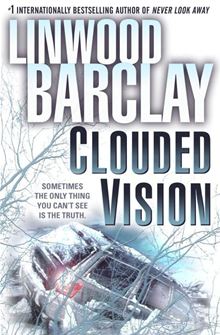
Book Review: Clouded Vision
It's high time I caught up on my Canadian Book Challenge reviews. I have been reading (thank you, hour-long commute!) but I just haven't made the time to write my reviews. I've got four books to review (and another two to read) and I've got the time now, so those reviews will be coming fast and furious.
The first in my backlog is Clouded Vision, a novella by Linwood Barclay. I used to read Barclay regularly when he was a columnist with the Toronto Star and when he left to pursue a writing career, well, I didn't follow. This is the first of his fiction offerings I've read. He has done quite well for himself, achieving international success with his crime books and I believe he's carved out his own niche for suburban crime thrillers.
So I felt kind of bad when I didn't like Clouded Vision.
I do like the novella as a format: longer than a short story, shorter than a novel but still enough to provide a good read. One of my favourite novellas is Rita Hayworth and the Shawshank Redemption by Stephen King, which was later adapted into one of my favourite movies, The Shawshank Redemption. Just because a novella is shorter doesn't mean it can't produce a good story.
Clouded Vision does have an interesting story: a young woman, Keisha, pretends to by psychic to help people, all the while charging $1,000 for her "skills". She goes to the house of a man whose wife is missing to give him "clues" and make a quick buck. Of course, things go terribly, horribly, awfully wrong.
There are some interesting twists, I'll give it that. The story sticks to the night when Keisha is pulling her scam, with a few flashbacks for context. The only characters in the story are necessary ones and the plot moves along quickly (though being a novella, there's no time to dilly-dally).
It's hard for me to pinpoint what exactly I didn't like about this book. The only reason I've kept thinking about it is because I have to review it. And I didn't feel any desire to pick up another book by Barclay; in fact I felt the opposite. I don't want to read more of his books, which makes me sad because I love me a good crime thriller and I love supporting Canadian authors. But this story just felt...flat.
I have no doubt that many people will read this and enjoy it and pick up other books by Barclay and enjoy them. I just won't be one of them.
The first in my backlog is Clouded Vision, a novella by Linwood Barclay. I used to read Barclay regularly when he was a columnist with the Toronto Star and when he left to pursue a writing career, well, I didn't follow. This is the first of his fiction offerings I've read. He has done quite well for himself, achieving international success with his crime books and I believe he's carved out his own niche for suburban crime thrillers.
So I felt kind of bad when I didn't like Clouded Vision.
I do like the novella as a format: longer than a short story, shorter than a novel but still enough to provide a good read. One of my favourite novellas is Rita Hayworth and the Shawshank Redemption by Stephen King, which was later adapted into one of my favourite movies, The Shawshank Redemption. Just because a novella is shorter doesn't mean it can't produce a good story.
Clouded Vision does have an interesting story: a young woman, Keisha, pretends to by psychic to help people, all the while charging $1,000 for her "skills". She goes to the house of a man whose wife is missing to give him "clues" and make a quick buck. Of course, things go terribly, horribly, awfully wrong.
There are some interesting twists, I'll give it that. The story sticks to the night when Keisha is pulling her scam, with a few flashbacks for context. The only characters in the story are necessary ones and the plot moves along quickly (though being a novella, there's no time to dilly-dally).
It's hard for me to pinpoint what exactly I didn't like about this book. The only reason I've kept thinking about it is because I have to review it. And I didn't feel any desire to pick up another book by Barclay; in fact I felt the opposite. I don't want to read more of his books, which makes me sad because I love me a good crime thriller and I love supporting Canadian authors. But this story just felt...flat.
I have no doubt that many people will read this and enjoy it and pick up other books by Barclay and enjoy them. I just won't be one of them.
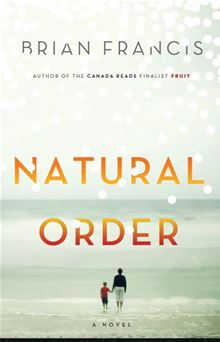
Book Review: Natural Order
Natural Order is my favourite book of 2011. Hands down. Go read it. Now.
Do you guys remember the book Fruit? It's about a boy who's nipples start talking to him one day and it was the runner up in the 2009 edition of Canada Reads. Fruit is written by Brian Francis and, though I've never read it, I may have to after reading Francis' Natural Order.
First, a note about the author: Brian Francis is a male (which may be obvious from the name, but pseudonyms and such can throw you for a loop), he's gay and I believe he lives in Toronto. Why is this important? Because he has made the narrator of Natural Order a small-town woman in her 80s named Joyce Sparks - and he does a fantastic job telling the story in her voice.
The story centres on Joyce and various stages of her life: as a teenager, as a wife and mother, as a widow living on her own and as an octogenarian in a nursing home nearing the end of her life. As Joyce narrated through her life, my emotions towards her changed. At times I liked her, hated her, sympathized with her, questioned her, and wanted to scream, "Just talk to him!". She's a frustrating character and comes across as both protagonist and antagonist simply by being herself.
As a teenager, Joyce fell in love with Freddy Pender, despite rumours that he was "fruity". When Freddy left his small-town life for an acting career, Joyce married Charlie Sparks and had a son named John, though she never stopped thinking of Freddy and would even buy the tabloids for a glimpse of him in his new life. Joyce eventually learns that Freddy has committed suicide by jumping from a cruise ship and is told by Freddy's mother that a mother always knows when something isn't right with her son.
These allusions to Freddy's homosexuality weigh on Joyce as she sees her beloved son drawn to dolls and kitchen sets rather than trucks and sports. Desperate to protect her son, Joyce begins making choices and keeping secrets from her husband, family and friends, trying to ensure John doesn't end up like Freddy. But her choices and secrets do have a devastating effect on her and her loved ones.
Homophobia is always simmering beneath the surface in this book and many would be appalled that people could think and feel this way towards homosexuals. However, I'm from a small town where homophobia also simmers and sometimes boils over and reading about Joyce in her small town and the attitudes people had towards gays hit close to home. At times it felt like Joyce was talking about people I knew and still know, people who still think this way.
Brian Francis is a wonderful writer and he takes the reader between the various times in Joyce's life easily, even when it's one paragraph to the next. Francis has Joyce hinting at what happened next in the past before taking the reader back to the present and Joyce's current struggles with her choices. These were lovely little cliffhangers that kept me reading far later into the night than I should have.
Despite her flaws, though, Joyce makes her decisions out of love and Francis never makes us think she's a hateful person. Confused, scared, proud, even devious, but never hateful. She does what she thinks is right, even if the reader knows it's so wrong and who wouldn't do what they think is right for someone they love?
Do you guys remember the book Fruit? It's about a boy who's nipples start talking to him one day and it was the runner up in the 2009 edition of Canada Reads. Fruit is written by Brian Francis and, though I've never read it, I may have to after reading Francis' Natural Order.
First, a note about the author: Brian Francis is a male (which may be obvious from the name, but pseudonyms and such can throw you for a loop), he's gay and I believe he lives in Toronto. Why is this important? Because he has made the narrator of Natural Order a small-town woman in her 80s named Joyce Sparks - and he does a fantastic job telling the story in her voice.
The story centres on Joyce and various stages of her life: as a teenager, as a wife and mother, as a widow living on her own and as an octogenarian in a nursing home nearing the end of her life. As Joyce narrated through her life, my emotions towards her changed. At times I liked her, hated her, sympathized with her, questioned her, and wanted to scream, "Just talk to him!". She's a frustrating character and comes across as both protagonist and antagonist simply by being herself.
As a teenager, Joyce fell in love with Freddy Pender, despite rumours that he was "fruity". When Freddy left his small-town life for an acting career, Joyce married Charlie Sparks and had a son named John, though she never stopped thinking of Freddy and would even buy the tabloids for a glimpse of him in his new life. Joyce eventually learns that Freddy has committed suicide by jumping from a cruise ship and is told by Freddy's mother that a mother always knows when something isn't right with her son.
These allusions to Freddy's homosexuality weigh on Joyce as she sees her beloved son drawn to dolls and kitchen sets rather than trucks and sports. Desperate to protect her son, Joyce begins making choices and keeping secrets from her husband, family and friends, trying to ensure John doesn't end up like Freddy. But her choices and secrets do have a devastating effect on her and her loved ones.
Homophobia is always simmering beneath the surface in this book and many would be appalled that people could think and feel this way towards homosexuals. However, I'm from a small town where homophobia also simmers and sometimes boils over and reading about Joyce in her small town and the attitudes people had towards gays hit close to home. At times it felt like Joyce was talking about people I knew and still know, people who still think this way.
Brian Francis is a wonderful writer and he takes the reader between the various times in Joyce's life easily, even when it's one paragraph to the next. Francis has Joyce hinting at what happened next in the past before taking the reader back to the present and Joyce's current struggles with her choices. These were lovely little cliffhangers that kept me reading far later into the night than I should have.
Despite her flaws, though, Joyce makes her decisions out of love and Francis never makes us think she's a hateful person. Confused, scared, proud, even devious, but never hateful. She does what she thinks is right, even if the reader knows it's so wrong and who wouldn't do what they think is right for someone they love?
Tuesday, September 13, 2011
Book Review: River City
I started the Canadian Book Challenge on a strong note: two book reviews in the first month, and two books that I thoroughly enjoyed. I foolishly thought I could keep that momentum going, regardless of whichever book I picked up next.
How wrong I was.
The reason I have not yet posted another review is because I chose River City by John Farrow as my next read. It sounded intriguing: set in Montreal in the 1950s and starting with the Rocket Richard riots, it's about the mysterious Cartier Dagger (Jacques Cartier, that is) and its involvement in a murder during the riots. Now, I like hockey and I like murder mysteries and I've not read many books set in la belle province so this piqued my interest. However, I made one huge mistake: I bought the e-book for my Kobo.
Now, I love reading on my Kobo and I've bought many books for it. The problem is that I don't look at the page count of the books I buy, mostly because it's not listed in the Kobo store but also because it doesn't much matter; one book page does not equal one Kobo page. This has never tripped me up before but then I've never bought an e-book that is over 700 pages in hard copy.
That's a lotta pages, yo.
I'm not afraid of long books (I have, after all, read The Stand) but if I'm going to read a long book I would like it to be a good book. And that is where River City falls down - it's not that good.
This is a book that would have benefited greatly from a braver editor, someone who was willing to slash and trash. My Kobo pages aren't big, but I don't need 100+ page chapters. There is a great story to tell here, but there's too much meandering. It reminded me of all the things I dislike about Victorian literature.
Oh, I forgot to mention that the book also switches back and forth between 1950s Montreal and the original settlement of Quebec and Montreal by French explorers, starting with Cartier and going through Champlain, Montmagny and I'm sure others that I just haven't got to. I think this is part of the
"hook" of the book but I just find it annoying. I read Susannah Moodie's Roughing It in the Bush in university and never wanted to revisit it again; this book brought me right back there. Also, I didn't feel like the two story lines from "then" and "now" worked together fluidly; it was like reading two different novels spliced together.
One last irritant in the book: Farrow jumps from one scene/situation to the next too suddenly. I'm reading along and hit a scene where two people are chatting in a cafe and in the next paragraph, one of those people is down by the docks roughing someone up. Maybe it's bad digital formatting and not bad writing, but it's still irritating.
So I put the book down and picked up Agatha Christie, who I have decided is like literary amuse bouche. Once my palate is properly cleansed I'll get back on the Canadian Book Challenge horse, though I'm not sure what I'll read next - any recommendations?
(I'm also not counting this as a full review, so I'm still at 2/13. Perhaps I'll feel sorry for this book and pick it up again, finish it and properly review it - though that doesn't feel likely.)
How wrong I was.
The reason I have not yet posted another review is because I chose River City by John Farrow as my next read. It sounded intriguing: set in Montreal in the 1950s and starting with the Rocket Richard riots, it's about the mysterious Cartier Dagger (Jacques Cartier, that is) and its involvement in a murder during the riots. Now, I like hockey and I like murder mysteries and I've not read many books set in la belle province so this piqued my interest. However, I made one huge mistake: I bought the e-book for my Kobo.
Now, I love reading on my Kobo and I've bought many books for it. The problem is that I don't look at the page count of the books I buy, mostly because it's not listed in the Kobo store but also because it doesn't much matter; one book page does not equal one Kobo page. This has never tripped me up before but then I've never bought an e-book that is over 700 pages in hard copy.
That's a lotta pages, yo.
I'm not afraid of long books (I have, after all, read The Stand) but if I'm going to read a long book I would like it to be a good book. And that is where River City falls down - it's not that good.
This is a book that would have benefited greatly from a braver editor, someone who was willing to slash and trash. My Kobo pages aren't big, but I don't need 100+ page chapters. There is a great story to tell here, but there's too much meandering. It reminded me of all the things I dislike about Victorian literature.
Oh, I forgot to mention that the book also switches back and forth between 1950s Montreal and the original settlement of Quebec and Montreal by French explorers, starting with Cartier and going through Champlain, Montmagny and I'm sure others that I just haven't got to. I think this is part of the
"hook" of the book but I just find it annoying. I read Susannah Moodie's Roughing It in the Bush in university and never wanted to revisit it again; this book brought me right back there. Also, I didn't feel like the two story lines from "then" and "now" worked together fluidly; it was like reading two different novels spliced together.
One last irritant in the book: Farrow jumps from one scene/situation to the next too suddenly. I'm reading along and hit a scene where two people are chatting in a cafe and in the next paragraph, one of those people is down by the docks roughing someone up. Maybe it's bad digital formatting and not bad writing, but it's still irritating.
So I put the book down and picked up Agatha Christie, who I have decided is like literary amuse bouche. Once my palate is properly cleansed I'll get back on the Canadian Book Challenge horse, though I'm not sure what I'll read next - any recommendations?
(I'm also not counting this as a full review, so I'm still at 2/13. Perhaps I'll feel sorry for this book and pick it up again, finish it and properly review it - though that doesn't feel likely.)
Monday, July 18, 2011
Book Review: The High Road
Terry Fallis' debut novel The Best-Laid Plans was recommended to me by my sister-in-law and, as I trust her judgment, I picked it up, which was a wise move not just because it was excellent but because it helped me through the last (disappointing) federal election. So it seemed apropos that the Canadian Book Challenge came along right when I needed to read the sequel, The High Road.
*NOTE: here be spoilers. Because this is a sequel, it's hard to review without giving some spoilers. Consider yourself warned and read at your own risk. ;)
The High Road picks up right where The Best-Laid Plans leaves off, with another federal election looming and maverick MP Angus McClintock unsure if he'll run again. Daniel is happily ensconced in his relationship with Lindsay and Muriel is the same stalwart Liberal, even if her Parkinson's is getting worse. When Angus decides to run (and how could he not, since the book needs to, you know, happen), Daniel stays on as campaign manager, Pete1 and Pete2 come back to help out, and this time, Angus wants to win.
Living in Toronto, I feel I've been surrounded by campaigning and political attack ads for far too long, what with the federal election this past May, our municipal election last fall and the upcoming provincial election this October. So it was interesting to see that Angus' Conservative opponent, Emerson "Flamethrower" Fox, had built his political career on running negative campaigns. When told this, Angus made the decision to not sink to that level, and instead to focus his campaign on the issues, not the dirt. A novel idea, indeed, and an example of when I would love to see life imitating art. The other interesting element of the campaigning is the addition of a right-wing independent candidate, Alden Stonehouse, who chose to run as an independent after losing the Conservative nomination. After the federal Liberals' historic defeat in May, Fallis' book seems to say the only way the Liberals can rebuild is to split the right (or, perhaps, stop splitting the left).
But political posturing aside, this book, like its predecessor, reads as a "what-if" in Canadian politics, not just what if the Liberals won, but what if governments put the needs of the country first; what if governments were transparent; what if governments stopped playing partisan long enough to actually get the important things done? Such novel ideas, which is perhaps why they only exist in a novel.
Of course, Angus once again wins and heads to Ottawa with a mandate to investigate the collapse of a major bridge - which leads to an investigation on Canadian infrastructure in general and the need to spend on infrastructure, which in turn will stimulate the economy. (Art imitating life much?) And once again Angus makes a huge impact in the government, in his community and in the lives of those around him. Oh, and the President of the United States shows up - and he's decidedly more Bush than Obama.
The book ends with the perfect set-up for a third installment, which would be great but perhaps a third book would be a good place to leave it. While the writing is wonderful, the characters fun and refreshing and the story perfectly sensible (if impractical), too much more of Angus et al would be too much.
The best parts of the book come at the end of each chapter, when Angus writes to his deceased wife in his diary. These entries provide a sweet but sad glimpse into Angus' mind and life, as he is still struggling with the loss of his wife of almost 40 years. Much of the comedy in the book comes from Angus' unorthodox way of thinking and being, his forthrightness and his incredulity at the foibles of others. But when reading the diary entries, a more vulnerable Angus emerges, someone who really is missing a part of himself and is trying to find his way back to a normal life without that integral part. His wife plays an important part in the book and his connection with her is truly beautiful. Even though the book is narrated by Daniel, it's still a story about Angus and, through the diary entries, he comes even more into the spotlight.
*NOTE: here be spoilers. Because this is a sequel, it's hard to review without giving some spoilers. Consider yourself warned and read at your own risk. ;)
The High Road picks up right where The Best-Laid Plans leaves off, with another federal election looming and maverick MP Angus McClintock unsure if he'll run again. Daniel is happily ensconced in his relationship with Lindsay and Muriel is the same stalwart Liberal, even if her Parkinson's is getting worse. When Angus decides to run (and how could he not, since the book needs to, you know, happen), Daniel stays on as campaign manager, Pete1 and Pete2 come back to help out, and this time, Angus wants to win.
Living in Toronto, I feel I've been surrounded by campaigning and political attack ads for far too long, what with the federal election this past May, our municipal election last fall and the upcoming provincial election this October. So it was interesting to see that Angus' Conservative opponent, Emerson "Flamethrower" Fox, had built his political career on running negative campaigns. When told this, Angus made the decision to not sink to that level, and instead to focus his campaign on the issues, not the dirt. A novel idea, indeed, and an example of when I would love to see life imitating art. The other interesting element of the campaigning is the addition of a right-wing independent candidate, Alden Stonehouse, who chose to run as an independent after losing the Conservative nomination. After the federal Liberals' historic defeat in May, Fallis' book seems to say the only way the Liberals can rebuild is to split the right (or, perhaps, stop splitting the left).
But political posturing aside, this book, like its predecessor, reads as a "what-if" in Canadian politics, not just what if the Liberals won, but what if governments put the needs of the country first; what if governments were transparent; what if governments stopped playing partisan long enough to actually get the important things done? Such novel ideas, which is perhaps why they only exist in a novel.
Of course, Angus once again wins and heads to Ottawa with a mandate to investigate the collapse of a major bridge - which leads to an investigation on Canadian infrastructure in general and the need to spend on infrastructure, which in turn will stimulate the economy. (Art imitating life much?) And once again Angus makes a huge impact in the government, in his community and in the lives of those around him. Oh, and the President of the United States shows up - and he's decidedly more Bush than Obama.
The book ends with the perfect set-up for a third installment, which would be great but perhaps a third book would be a good place to leave it. While the writing is wonderful, the characters fun and refreshing and the story perfectly sensible (if impractical), too much more of Angus et al would be too much.
The best parts of the book come at the end of each chapter, when Angus writes to his deceased wife in his diary. These entries provide a sweet but sad glimpse into Angus' mind and life, as he is still struggling with the loss of his wife of almost 40 years. Much of the comedy in the book comes from Angus' unorthodox way of thinking and being, his forthrightness and his incredulity at the foibles of others. But when reading the diary entries, a more vulnerable Angus emerges, someone who really is missing a part of himself and is trying to find his way back to a normal life without that integral part. His wife plays an important part in the book and his connection with her is truly beautiful. Even though the book is narrated by Daniel, it's still a story about Angus and, through the diary entries, he comes even more into the spotlight.
Tuesday, July 12, 2011
Book review: Alone in the Classroom
I have just finished reading Alone in the Classroom by Elizabeth Hay and it's left me still thinking about it which, to me, is a good sign. But it's also left me feeling unfulfilled, which is not necessarily a bad thing. It's only been about two hours since I finished the book, but I feel like this one will stay with me, much like Hay's previous novel Late Nights on Air has stayed with me.
Alone in the Classroom is really about the narrator, Anne, finding out about her family; the story centres on Anne relating stories about her aunt, Connie Flood. Much like a tree, Connie's story is only one branch but it seems to be the sturdiest and most twisting branch of the tree, at least for Anne.
Most of the book focuses on Connie, from her schoolteacher beginnings in rural Saskatchewan to her time at a newspaper in Ottawa back to schoolteaching in Maine. Also intertwined with the branch that is Connie's life are the two men that influence Connie's life the most: her principal, Ian "Parley" Burns and one of her students, Michael Graves. Both Parley and Michael play important roles in who Connie becomes and how she lives her life.
Also integral to the book are two tragic deaths of young school girls, one of which opens the book, and the reasons for these deaths that are only hinted at and alluded to, but never fully explained.
It is the non-resolution behind the deaths that left me feeling unfulfilled, but there is enough information presented that the reader can draw her own conclusions and feel satisfied in their accuracy. My problem is that I had an idea about one of them that I thought was pretty great - turns out I was either way off base or Hay didn't feel the need to clarify things for me. But this is not a bad thing, merely something I will continue to think about as I dwell on the characters that I feel I know so much about.
And that is also the beauty of Hay's writing, her ability to make me think and care about her characters. She also has a wonderful way with words when describing the outdoors and the wilds of Canada, which is evident both in Alone in the Classroom and Late Nights on Air. I still think about the canoe trip in Late Nights, three years after reading the book.
This book feels like Canadian Literature with a capital "L", something I haven't indulged in for far too long. After reading this book, I found my Toronto-dwelling self yearning for a cabin in the woods, a small lake and trees as far as the eye can see; thankful for the stability of my own relationship and that I'm spared the agonies of the heart experienced by Connie and Anne (and all the women in the book); and curious about my own family, wondering what stories might be hidden in my genealogy, what happiness and tragedy has shaped my own family.
Alone in the Classroom is really about the narrator, Anne, finding out about her family; the story centres on Anne relating stories about her aunt, Connie Flood. Much like a tree, Connie's story is only one branch but it seems to be the sturdiest and most twisting branch of the tree, at least for Anne.
Most of the book focuses on Connie, from her schoolteacher beginnings in rural Saskatchewan to her time at a newspaper in Ottawa back to schoolteaching in Maine. Also intertwined with the branch that is Connie's life are the two men that influence Connie's life the most: her principal, Ian "Parley" Burns and one of her students, Michael Graves. Both Parley and Michael play important roles in who Connie becomes and how she lives her life.
Also integral to the book are two tragic deaths of young school girls, one of which opens the book, and the reasons for these deaths that are only hinted at and alluded to, but never fully explained.
It is the non-resolution behind the deaths that left me feeling unfulfilled, but there is enough information presented that the reader can draw her own conclusions and feel satisfied in their accuracy. My problem is that I had an idea about one of them that I thought was pretty great - turns out I was either way off base or Hay didn't feel the need to clarify things for me. But this is not a bad thing, merely something I will continue to think about as I dwell on the characters that I feel I know so much about.
And that is also the beauty of Hay's writing, her ability to make me think and care about her characters. She also has a wonderful way with words when describing the outdoors and the wilds of Canada, which is evident both in Alone in the Classroom and Late Nights on Air. I still think about the canoe trip in Late Nights, three years after reading the book.
This book feels like Canadian Literature with a capital "L", something I haven't indulged in for far too long. After reading this book, I found my Toronto-dwelling self yearning for a cabin in the woods, a small lake and trees as far as the eye can see; thankful for the stability of my own relationship and that I'm spared the agonies of the heart experienced by Connie and Anne (and all the women in the book); and curious about my own family, wondering what stories might be hidden in my genealogy, what happiness and tragedy has shaped my own family.
Subscribe to:
Posts (Atom)